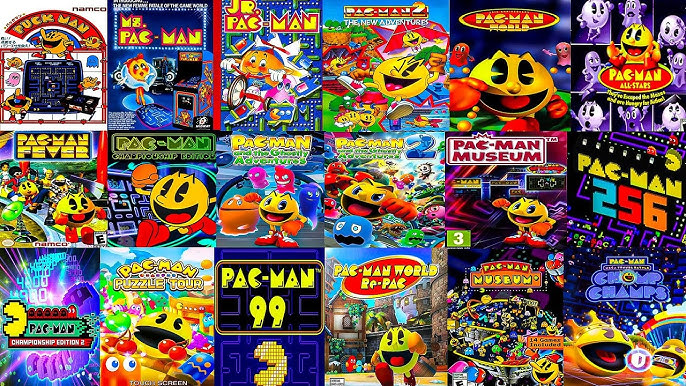
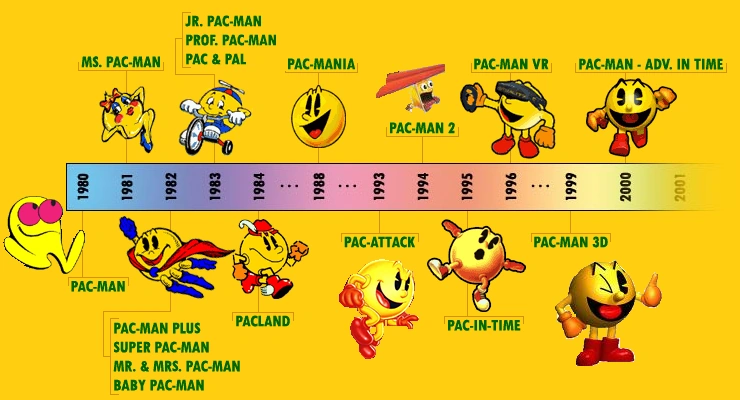
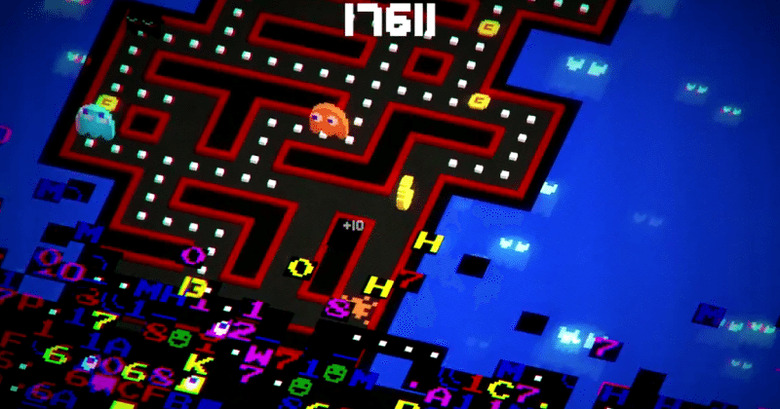
At first glance, Pac-Man looks like a simple chase game: four colorful ghosts roam a maze while you, the player, gobble dots and try not to get caught.
But beneath the cheerful graphics lies one of the most brilliantly designed AI systems in gaming history – one that’s predictable enough to be fair, yet complex enough to keep players on edge even four decades later.
The ghosts – Blinky, Pinky, Inky, and Clyde – don’t move randomly. Each follows a distinct personality and algorithm, carefully engineered by Pac-Man’s creator, Toru Iwatani, and Namco programmer Toshio Kai, in 1980.
In this article, you’ll learn exactly how each ghost thinks, how their behavior changes mid-game, and how players can use these patterns to their advantage.
Meet the Ghosts: Personalities with a Purpose
Each of Pac-Man’s four ghost enemies has its own “personality.” This wasn’t just for storytelling – it’s part of their AI logic.
| Ghost | Color | Japanese Name (Meaning) | English Name | Personality / Behavior |
|---|---|---|---|---|
| 赤いお化け (Aka Oni) | Red | Oikake (“Chaser”) | Blinky | Aggressive pursuit of Pac-Man |
| ピンクのお化け (Pinku Oni) | Pink | Machibuse (“Ambusher”) | Pinky | Tries to position ahead of Pac-Man |
| 水色のお化け (Mizuiro Oni) | Cyan | Kimagure (“Fickle”) | Inky | Unpredictable; uses a vector formula based on Pac-Man and Blinky |
| オレンジのお化け (Orenji Oni) | Orange | Otoboke (“Feigned Ignorance”) | Clyde | Alternates between chasing and wandering |
These personalities were intentionally coded to make players feel like the ghosts had emotions and strategies – even though everything they do follows mathematical logic.
How the Ghost AI System Works
Pac-Man’s ghost AI operates on a finite state machine – meaning each ghost switches between different behavior modes depending on time and game events.
The four core modes are:
- Chase Mode – Ghosts actively target Pac-Man using individual algorithms.
- Scatter Mode – Each ghost retreats to a specific corner of the maze.
- Frightened Mode – Triggered when Pac-Man eats a Power Pellet; ghosts turn blue and move semi-randomly.
- Eaten Mode – When eaten by Pac-Man, a ghost’s eyes return to the ghost house to regenerate.
State Transitions
Ghosts don’t stay in one mode forever. The game alternates between Chase and Scatter several times per level.
| Level Segment | Scatter Duration | Chase Duration |
|---|---|---|
| 1st cycle | 7 seconds | 20 seconds |
| 2nd cycle | 7 seconds | 20 seconds |
| 3rd cycle | 5 seconds | 20 seconds |
| 4th cycle onward | Forever chase |
After the fourth cycle, ghosts remain in permanent pursuit, which is why later levels feel relentless.
Understanding the Maze Grid Logic
The Pac-Man maze is divided into a 28×31 grid, and each tile has coordinates. The ghosts move one tile at a time, recalculating their direction whenever they reach an intersection.
At each intersection, a ghost chooses one of the possible directions (up, down, left, right) based on its target tile – the grid coordinate it’s trying to reach.
Target Tile = AI Objective
- In Chase Mode, each ghost’s target tile depends on Pac-Man’s position and direction.
- In Scatter Mode, the target tile is fixed (e.g., Blinky always heads for the top-right corner).
Ghosts cannot reverse direction unless switching modes – this adds predictability for skilled players to exploit.
Individual Ghost Behavior Explaine
Blinky – “The Chaser”
Blinky (red) is the most straightforward and aggressive.
He targets Pac-Man’s current tile directly, moving at the same or slightly higher speed.
As levels progress, his speed increases – earning him the nickname “Cruise Elroy.”
Cruise Elroy Mode
When a certain number of pellets remain:
- Blinky’s speed increases.
- He no longer alternates between chase/scatter.
- He directly hunts Pac-Man continuously.
This design makes the game tenser as you near maze completion – your main hunter literally speeds up the closer you get to victory.
Inky – “The Wild Card”
Inky (cyan) is the most complex – his target tile depends on both Pac-Man and Blinky.
The algorithm:
- Take a point two tiles ahead of Pac-Man’s current direction.
- Draw a vector from Blinky’s position to that point.
- Double that vector — the end point becomes Inky’s target tile.
This means Inky’s behavior depends on Blinky’s proximity. When Blinky is far, Inky may act timid; when Blinky is close, he joins the pursuit from unexpected angles.
In practice, Inky’s unpredictability adds chaos to the maze – you can’t memorize his pattern easily.
Clyde – “The Drifter”
Clyde (orange) alternates between chasing Pac-Man and wandering.
His rule:
- If more than 8 tiles away, he behaves like Blinky (targets Pac-Man).
- If within 8 tiles, he retreats to his corner.
Clyde’s back-and-forth pattern can lure players into traps.
While he seems less aggressive, his unpredictability often ruins “safe patterns” during longer games.
Ghost Movement Priorities
When a ghost reaches an intersection, it evaluates all possible directions (except reversing). It chooses the path that minimizes the Euclidean distance between its next tile and its target tile.
Priority order:
- Up
- Left
- Down
- Right
This subtle bias affects how ghosts behave in certain junctions – for example, Blinky often approaches from above when multiple paths are available.
Speed and Behavior by Level
Ghost and Pac-Man speeds change as levels increase:
| Level | Pac-Man Speed | Ghost Speed | Frightened Duration |
|---|---|---|---|
| 1 | 80% | 75% | 6 seconds |
| 5 | 90% | 85% | 3 seconds |
| 9 | 100% | 95% | 1 second |
| 21+ | 90% | 95% | 0 seconds (no blue mode) |
By Level 21, Power Pellets no longer turn ghosts blue – the “Frightened” state disappears, making perfect pattern play essential.
How “Patterns” Work – And Why They Matter
Early players discovered that Pac-Man’s AI, though clever, is still deterministic. Since ghosts follow fixed movement logic, players could design movement “patterns” that guarantee safety and maximum points.
Examples:
- Cherry Pattern (Level 1): guides Pac-Man through a predictable route.
- Mid-Fruit Pattern: optimized for clearing pellets near ghosts safely.
- Apple Pattern: used in advanced play for near-perfect runs.
However, later versions (like Ms. Pac-Man) added randomness to ghost movement – eliminating perfect pattern looping.
Why the AI Feels “Human”
Toru Iwatani designed the ghosts not just to chase Pac-Man, but to convey emotion:
- Blinky feels like anger (direct pursuit).
- Pinky feels cunning (ambush).
- Inky feels nervous (hesitant).
- Clyde feels lazy (unpredictable).
This emotional illusion – achieved with only a few lines of code – made Pac-Man feel alive.
It’s a prime example of early procedural personality design in gaming.
Exploiting Ghost Behavior: Pro Tips
For serious players aiming for high scores:
- Memorize Scatter Timing
Learn when ghosts retreat; use those seconds to clear risky pellets. - Corner Awareness
Pinky loves to camp corners – approach from diagonals when possible. - Track Blinky’s “Elroy” Mode
When pellets are nearly gone, shift routes to avoid straight chases. - Use Tunnels Strategically
Ghosts slow down by ~40% in tunnels; use them for quick escapes. - Leverage Frightened Mode
Eat ghosts for points but focus on pellet clearing during blue-time transitions.
Pac-Man’s ghost AI remains a marvel of early game design – a perfect blend of logic, psychology, and illusion.
Each ghost acts differently, but together they form a dynamic ecosystem that keeps players challenged without needing randomness.
That’s why even after 40 years, studying their patterns is still fascinating.
So next time you play, remember: Every move you make, every turn you take – the ghosts are calculating.