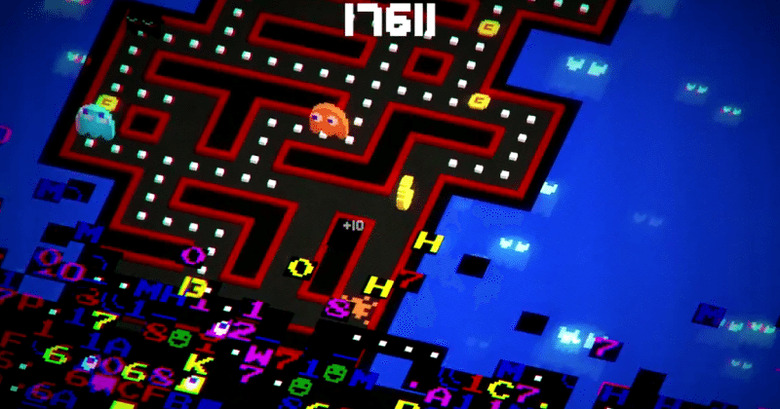
If you’ve ever tried to play Pac-Man endlessly, you’ve probably hit an impossible wall at some point – literally. On level 256, half of the maze becomes a chaotic mess of symbols, fruit icons, and glitchy walls that no one can complete.
That infamous phenomenon is called the “kill screen.”
But why does Pac-Man end there?
Was it intentional – a secret level? Or just a mistake?
In this guide, we’ll break down the true story behind Pac-Man’s level 256 glitch, how it happens, what it reveals about 1980s game design, and how modern versions have embraced this bug as part of gaming history.
The Origins of Pac-Man’s Endless Design
When Namco released Pac-Man in 1980, it was designed to be endless. The idea was that players would keep going, level after level, with ghosts moving faster and Power Pellets lasting shorter durations.
In theory, you could play forever – as long as you didn’t lose all your lives.
However, Pac-Man was built on 8-bit hardware, meaning the game’s level counter (a single byte in memory) could only store values from 0 to 255.
When the game tries to load level 256, the number overflows. That’s where everything breaks.
Understanding the 8-Bit Limitation
In modern computing, we take large data storage for granted.
But in 1980, Pac-Man’s code was limited by its hardware.
The Level Counter Variable
The game keeps track of your current level with an 8-bit integer, which can only count up to 255 (in binary: 11111111). When it tries to load level 256, that value rolls over to 0 – but the game’s logic still expects to render a new maze.
The result:
The left half of the maze renders normally.
The right half is filled with random symbols from memory that were never meant to appear onscreen.
This bizarre collision of normal and corrupted data creates what we now know as the kill screen.
What Actually Happens at Level 256
Here’s what players experience when they reach the bugged stage:
- The level starts normally with the usual maze layout.
- The right half of the screen fills with garbled characters, symbols, and fruit icons.
- Many dots become invisible or inaccessible.
- Pac-Man can still move — but you can’t clear the maze because 9 hidden pellets are stuck in the glitched area.
- The game never advances to level 257.
That’s why even “perfect game” players can’t go beyond level 256 – there’s simply no way to finish it.
The Technical Breakdown: Why It Happens
To understand the kill screen properly, let’s look under the hood.
The Fruit Table Error
Each level in Pac-Man has a set of fruit bonuses that cycle (Cherry, Strawberry, Orange, Apple, etc.).
The code that draws these fruits relies on the level number to decide which fruit to show.
When the level variable exceeds 255, the code starts reading garbage data from memory, since there’s no valid index beyond that range.
The Draw Function Glitch
The routine responsible for rendering dots, walls, and fruit misreads memory beyond the intended array.
It draws whatever binary data happens to be there — resulting in the bizarre right-side mosaic.
The Game Logic Conflict
Although the visual maze is corrupted, the internal “dot counter” still thinks there are 244 pellets.
But since 9 of them exist in unreachable coordinates, the game never registers a “level complete” condition.
In short: the kill screen isn’t a challenge — it’s a dead end.
Why Level 256 Became Legendary
By the early 1980s, Pac-Man had become a cultural phenomenon, with over 100,000 arcade cabinets sold in the U.S. alone.
Most casual players never made it past level 21. But when competitive players discovered that level 256 existed – and that it was unbeatable – it became a mythic milestone in arcade gaming.
It was proof that you’d mastered Pac-Man to its literal limit.
Perfect Game Definition
A perfect Pac-Man game means:
- Eating all 240 dots, 4 energizers, and 4 ghosts per level (plus fruit bonuses).
- Doing so without losing a life.
- Reaching level 256 before the kill screen stops progress.
That results in the maximum possible score: 3,333,360 points
In 1999, Billy Mitchell became the first person officially recognized for achieving this perfect game – playing over six hours straight without error.
The Math Behind the Glitch
For the technically inclined, here’s a simplified explanation of the overflow:
| Component | Value Type | Limit | What Happens at 256 |
|---|---|---|---|
| Level counter | 8-bit unsigned integer | 255 max | Rolls over to 0 |
| Fruit array | 8 elements | 0–7 index | References invalid memory |
| Draw routine | Memory pointer | 32KB limit | Reads from incorrect address space |
| Result | — | — | Memory corruption = kill screen |
The key problem: There’s no error handling – early arcade systems didn’t account for variable overflow because programmers never expected anyone to get that far.
How Players Discovered and Documented It
The first known sightings of the kill screen came from elite players in the early 1980s who managed to marathon Pac-Man games for hours.
Because arcades didn’t have recording tools at the time, many reports were considered rumors until professional competitive gaming emerged.
By the late 1990s, as high-score documentation became formalized through Twin Galaxies and Guinness World Records, video evidence confirmed the glitch.
The kill screen became a rite of passage – a visual badge of ultimate mastery.
Variants and Reproductions
Since 1980, the level 256 glitch has appeared in multiple versions of the game — intentionally and otherwise.
Original Arcade (Namco, 1980)
- The authentic kill screen appears exactly as described.
- Half the screen glitched, half playable.
Pac-Man 30th Anniversary (Google Doodle, 2010)
- Google recreated the classic game, including the level 256 kill screen, as a tribute to the original bug.
Pac-Man Championship Edition DX / DX+
- Modern editions use infinite procedural mazes – no kill screen, but Easter eggs reference “256.”
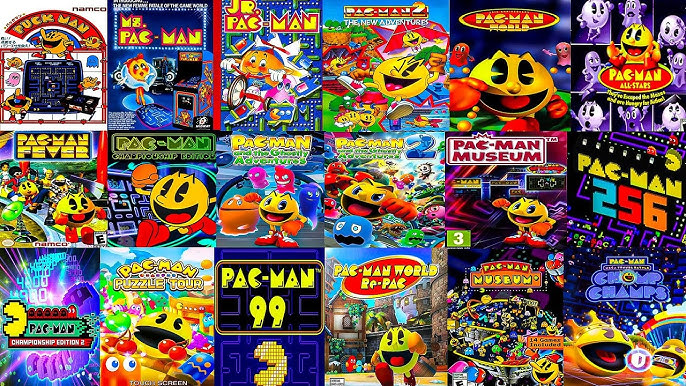
Pac-Man 256 (2015, Hipster Whale / Bandai Namco)
- A mobile and console game based entirely on the glitch – players run endlessly through a maze while the kill screen glitch “chases” them from below.
- It’s both homage and satire – turning a programming error into a gameplay mechanic.
The Psychology of the Kill Screen
What makes the kill screen so fascinating is how it turns failure into achievement.
It’s not a designed “boss” or “ending” — it’s a natural limit of the game’s technology.
And yet, for players, reaching it feels like beating the system.
Why It Matters
- It’s the ultimate boundary – proof of human skill meeting machine limits.
- It symbolizes the imperfection of early digital art.
- It turned a bug into legend, influencing game preservation and speedrunning culture.
As gaming historian Steve L. Kent wrote:
“Pac-Man’s kill screen isn’t a flaw. It’s a monument to how far we pushed the machine – and ourselves.”
The level 256 bug teaches more than just programming trivia – it captures the spirit of an era when limitations sparked creativity.
Lessons Learned:
- Constraints create legends: without 8-bit limits, the kill screen wouldn’t exist.
- Players love imperfection: sometimes, bugs become beloved features.
- Design beyond the rules: Pac-Man’s AI and math outlived its hardware.
The kill screen stands as an unintentional masterpiece – proof that even technical errors can shape culture.