When Pac-Man hit arcades in 1980, it wasn’t just another coin-operated machine – it was a cultural event. Lines formed, tokens clinked, and players competed for one thing: the highest score.
Four decades later, those same scoreboards have evolved from local bragging rights to Guinness World Records, streamed tournaments, and data-driven precision runs watched by millions online.
This is the story of how a simple maze game turned into one of the most enduring records in competitive gaming – the evolution of Pac-Man world records from 1980 to today.
The Birth of a High-Score Culture (1980-1982)
When Pac-Man launched in Japan and North America in 1980, the idea of a “video game record” was still new. Players didn’t have online leaderboards or save files – scores were physical, displayed at the top of arcade screens.
Local Legends
Each arcade became a micro-competition hub. Players wrote their initials on scoreboards or took Polaroids of their best runs to prove their dominance.
Media Recognition Begins
In 1981, Twin Galaxies, founded by Walter Day in Ottumwa, Iowa, began cataloging high scores across arcade games. By 1982, Pac-Man was one of the most tracked titles — and it was clear that a perfect run might be theoretically possible, but no one had achieved it yet.
The Perfect Game Myth (1982–1990)
As players mastered Pac-Man’s patterns, they began realizing that its design was finite – the maze never changed, and the ghosts followed predictable behaviors.
Discovery of the “Pattern System”
By studying ghost AI and movement timing, top players developed repeatable routes to clear levels safely. The “Cherry Pattern” and “Apple Pattern” became legendary among serious competitors.
The Impossible Level
However, rumors spread about a hidden final level – a “glitch” that made the game unplayable. Few had reached it, but whispers of a “kill screen” at level 256 turned Pac-Man mastery into a near-mythical goal.
No one had yet proven it could be reached perfectly – every pellet eaten, every ghost consumed, no deaths. The perfect game became the Everest of arcades.
1999: Billy Mitchell and the First Perfect Game
On July 3, 1999, at a Funspot Family Fun Center in New Hampshire, Billy Mitchell – a long-time arcade competitor – achieved the impossible.
The Perfect Run
Mitchell scored the maximum possible number of points in Pac-Man:
3,333,360 points
Every dot, fruit, and ghost eaten
No deaths
Ending at the infamous level 256 kill screen
It took 6 hours and 15 minutes of uninterrupted play.
The feat was confirmed by Twin Galaxies and later certified by Guinness World Records as:
“The First Perfect Score in Pac-Man.”
This achievement solidified Mitchell’s status as an arcade legend and proved the game could, in fact, be mastered to mathematical perfection.
Understanding the Perfect Score (The Math)
Each level in Pac-Man contains:
- 240 dots × 10 pts = 2,400 pts
- 4 Power Pellets × 50 pts = 200 pts
- 4 Ghosts per pellet (up to 3,200 pts)
- Fruit bonuses (100–5,000 pts)
With precise routing and zero mistakes, the total cumulative score across 255 levels reaches 3,333,360 before the kill screen halts progress.
It’s not random – it’s pure algorithmic mastery.
2000s: Verification, Competition, and Controversy
After Mitchell’s record, Pac-Man high-score chasing became global. Players wanted to either match or beat the “perfect game” milestone.
Twin Galaxies’ Role
Twin Galaxies became the de facto world record authority for arcade games, maintaining video verification standards long before Twitch streaming existed.
Emerging Competitors
Names like Chris Ayra, Rick Fothergill, and David Race entered the conversation. Each aimed not to score higher (since 3,333,360 is the max) but to reach it faster.
Race for Speed
In 2012, David Race achieved the fastest perfect game ever recorded:
3 hours, 28 minutes, 49 seconds
It wasn’t about points anymore – it was about efficiency.
The Digital Era: Emulators and Accessibility (2010–2020)
The rise of MAME (Multiple Arcade Machine Emulator) and online leaderboards made Pac-Man more accessible than ever. Players could now train, record, and share runs globally.
Benefits
- Practice without costly arcade tokens
- Frame-by-frame review for pattern optimization
- Transparent score verification via live streams
Challenges
- Purists argued that only original hardware should count.
- Differences in timing, input lag, and ROM versions could affect gameplay slightly.
- Twin Galaxies introduced stricter submission categories: Arcade Hardware vs Emulated Play.
Despite debates, the global Pac-Man community flourished.
The Guinness Records Timeline
| Year | Record Holder | Achievement | Score / Time | Notes |
|---|---|---|---|---|
| 1981 | Unknown | Early unofficial record | ~1 million | Pre-verification era |
| 1999 | Billy Mitchell | First perfect score | 3,333,360 | Confirmed at Funspot |
| 2004 | Chris Ayra | Verified perfect game | 3,333,360 | Used improved route efficiency |
| 2009 | Rick Fothergill | Perfect game | 3,333,360 | Second Canadian to do so |
| 2012 | David Race | Fastest perfect game | 3:28:49 | Still unbeaten as of 2025 |
| 2018 | Abdner Ashman | Perfect run (emulated) | 3,333,360 | First live-streamed on Twitch |
| 2022 | Jon Stoodley | Perfect on original cabinet | 3,333,360 | UK-based record, confirmed live |
Modern Variants: New Challenges for a New Era
As Pac-Man evolved, new editions introduced fresh challenges and records.
Pac-Man Championship Edition (2007–2020)
- Introduced timed runs and score-attack modes.
- New leaderboards track highest points within time limits, not infinite runs.
- Modern pro players achieve over 3.5 million points in DX+ editions through advanced ghost chaining.
Pac-Man 256 (2015)
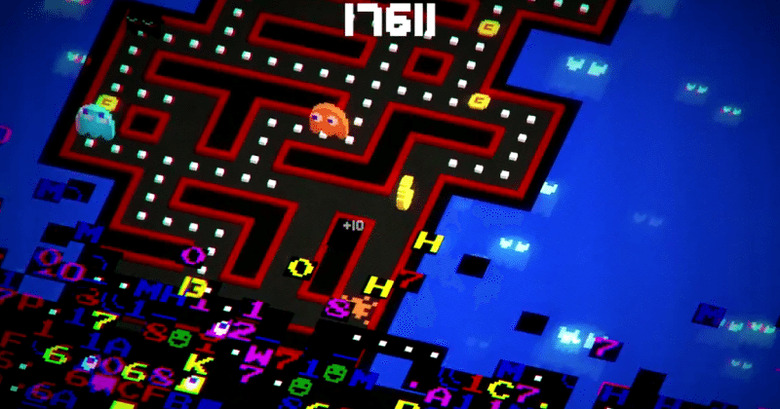
- Inspired directly by the kill screen glitch.
- Endless-run format with multipliers and power-ups.
- World records in this version exceed 10 million points, thanks to combo mechanics.
Mobile and Browser Versions
From Google’s 2010 Doodle to Facebook Instant Games, Pac-Man records now span every platform – proving the legacy still thrives.
How Records Are Verified Toda
Required Proof
- Full continuous video recording of gameplay
- Verification of hardware / ROM version
- Public leaderboard or live broadcast
- Post-run analysis by recognized moderators
Platforms like speedrun.com, Twitch, and YouTube Live now act as decentralized record repositories, allowing the global community to verify in real time.
The Psychology of Perfection
Why do players chase the same perfect score – a goal that can’t be beaten? Because in Pac-Man, perfection is the game itself.
The joy isn’t in topping others; it’s in executing an entire system flawlessly, knowing even a single missed pellet invalidates the run.
It’s a meditative exercise – rhythm, timing, memory, and patience working together. That’s why Pac-Man’s perfection remains more philosophical than competitive.
“The perfect game isn’t about the score. It’s about control.”
– David Race, record holder
Lessons from 45 Years of Records
What makes Pac-Man’s record history so enduring isn’t just competition – it’s the philosophy behind it.
Key Takeaways:
- Limits create legends – the 8-bit boundary gave us the kill screen.
- Perfection inspires obsession – every record-holder chases flawlessness, not luck.
- Community preserves history – from arcades to Twitch, players keep the flame alive.
Pac-Man proved that even the simplest games can produce infinite mastery.