In 1980, a glowing yellow circle changed the world. Pac-Man wasn’t just a hit arcade game – it was a cultural phenomenon that shaped gaming’s future.
Fast-forward more than 40 years, and Pac-Man now lives on billions of mobile devices. The transition from arcade cabinet to touchscreen wasn’t just a technical leap; it was a philosophical one.
So how does mobile Pac-Man compare to the classic original? Let’s explore their gameplay, design, and cultural impact – and see how a simple concept survived the greatest platform shift in gaming history.
The Origins of Classic Pac-Man (1980)
Designed by Toru Iwatani at Namco, Pac-Man was meant to stand apart from the violent shooters that dominated arcades at the time (Space Invaders, Asteroids).
Core Idea
A non-violent, universally fun game – “the game of eating.”
The concept was inspired by a pizza missing a slice – and the Japanese character for “mouth” (口).
The original 1980 version featured:
- One maze layout
- Four ghosts (Blinky, Pinky, Inky, Clyde)
- Simple rules: eat all dots, avoid ghosts, clear levels.
It became an overnight sensation – drawing men, women, and children into arcades and turning Pac-Man Fever into a global craze.
Mobile Pac-Man: The Modern Reinvention
When smartphones exploded in the late 2000s, Namco saw a chance to bring Pac-Man to a new generation.
| Year | Version / Platform | Notable Features |
|---|---|---|
| 2004 | Pac-Man Mobile (Java) | First phone port; simple keypad controls |
| 2010 | Google Doodle Pac-Man | Browser-based remake for 30th Anniversary |
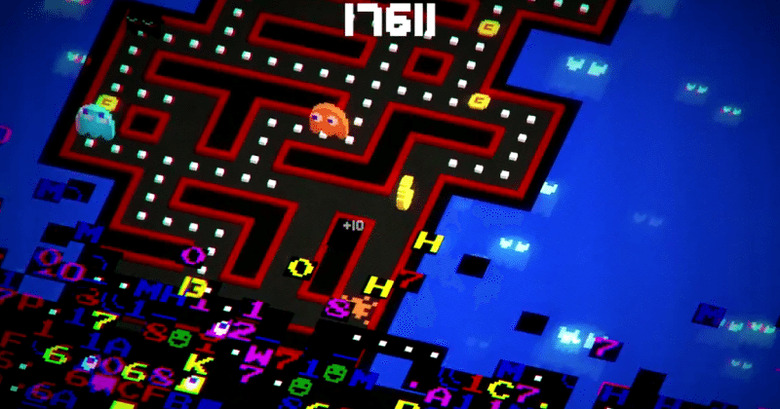
| 2015 | Pac-Man 256 | Endless-runner version inspired by the kill screen |
| 2016+ | Pac-Man Pop! & Pac-Man Party Royale | Modern mobile spin-offs with multiplayer and puzzles |
Each iteration reimagined Pac-Man for smaller screens and modern attention spans – faster, flashier, and infinitely replayable.
Gameplay Mechanics: Old-School Strategy vs. Touchscreen Reflexes
| Feature | Classic Pac-Man (1980) | Mobile Pac-Man (Modern) |
|---|---|---|
| Maze Layout | One static map | Dozens of rotating mazes or endless runs |
| Controls | 4-way joystick | Swipe or virtual pad |
| Ghost AI | Predictable, pattern-based | Randomized / adaptive AI |
| Objectives | Clear levels | Survive or set time-based scores |
| Lives | 3 per game | Often infinite (with time or ad limits) |
| Speed | Gradual increase | Dynamic, accelerates per maze |
| Scoring | Linear | Combo-based, multipliers, challenges |
In short, the classic game rewards patience and memorization; the mobile versions reward speed, instinct, and persistence.
The Feel: Arcade Precision vs. Casual Accessibility
Classic Pac-Man
- Tight joystick control, perfect grid alignment.
- Pixel-level accuracy – one wrong turn meant death.
- Slow buildup to frantic chaos by level 20.
Mobile Pac-Man
- Swipe or tilt controls – less precise, but faster.
- Often includes slow-motion bonuses or “revive” mechanics.
- Designed for short, repeatable sessions rather than marathon endurance.
Classic Pac-Man was a test of endurance and memory. Mobile Pac-Man is a test of reflexes and flow.
Visual Design: From CRT Glow to Neon Minimalism
Classic Look
- Black background with neon maze lines.
- Simple sprites, 8-bit sound.
- Distinct “waka-waka” audio loop became iconic.
Mobile Aesthetic
- 3D-inspired effects, modern lighting, vivid color gradients.
- Character animations with expressions and particle effects.
- Music remixes and dynamic soundtracks that evolve with combos.
The mobile versions keep the original charm but amplify it with modern visual rhythm – turning nostalgia into spectacle.
Scoring Systems: Simplicity vs. Strategy
In the arcade version:
- Dots: 10 points each
- Power Pellets: 50 points
- Ghosts (in sequence): 200 → 400 → 800 → 1600
- Fruit bonuses: up to 5,000 points
In mobile versions (Pac-Man CE DX, Pac-Man 256, etc.):
- Score chains multiply exponentially with ghost combos.
- Power-ups (lasers, bombs, freezing, magnet) increase scoring depth.
- Endless-runner formats allow infinite progression, not finite perfection.
So while the classic version celebrates mastery and pattern memorization, mobile Pac-Man celebrates momentum and combo creativity.
Game Modes and Replayability
| Mode | Classic Pac-Man | Mobile Variants |
|---|---|---|
| Endurance / Score Attack | Yes | Yes |
| Time Trial | No | Yes |
| Multiplayer | No | Yes (Pac-Man Party Royale) |
| Endless Mode | No | Yes (Pac-Man 256) |
| Missions / Challenges | No | Yes |
| Customization / Skins | No | Yes (themes, maps, ghost styles) |
The Economics: Quarters vs. Microtransactions
1980s Model
- Each game: 25 cents.
- High scores = bragging rights, not rewards.
- Limited accessibility — required local arcades.
Mobile Model
- Free-to-play with ads or in-app purchases.
- Optional skins, themes, continues, or XP boosts.
- Global leaderboards and social challenges.
The economic shift turned Pac-Man from a physical arcade experience into a persistent live service, where engagement and competition are continuous.
The Philosophy of Both Versions
| Classic Pac-Man Philosophy | Mobile Pac-Man Philosophy |
|---|---|
| Mastery through memorization | Mastery through adaptation |
| Precision and patience | Speed and creativity |
| Local competition | Global sharing |
| One mistake = game over | Endless retries and evolution |
| Focus on limits | Focus on progression |
Both versions celebrate control and survival, but in different ways. One teaches restraint; the other rewards risk.
The Legacy: Two Halves of the Same Maze
In truth, classic and mobile Pac-Man aren’t rivals – they’re reflections of their eras.
The 1980s demanded skill and quarters.
The 2020s demand speed and engagement.
Yet both share the same heartbeat: A hungry yellow hero, four chasing ghosts, and a simple rule – keep moving forward.