Before Mario and Luigi, before Sonic and Tails – there was Pac-Man and Ms. Pac-Man. Two yellow, circular icons who not only defined the arcade era but also sparked one of gaming’s earliest and most fascinating rivalries.
While they share a name and gameplay roots, Pac-Man and Ms. Pac-Man represent two different philosophies of design, audience, and innovation. Their story isn’t just about who eats the most pellets – it’s about creativity, licensing battles, and cultural evolution in the 1980s.
Let’s explore how a simple sequel became an icon in her own right – and why fans still debate which Pac reigns supreme.
The Birth of Pac-Man: A 1980 Revolution
The tale begins in 1980, when Toru Iwatani, a designer at Namco, introduced the world to Pac-Man.
At the time, arcades were dominated by space shooters like Space Invaders and Asteroids. Iwatani wanted something friendlier, especially for women and couples.
He envisioned a non-violent, visually charming game centered on eating rather than shooting. The result was Pakkuman (later Pac-Man), whose circular design came from — legend says — a pizza missing a slice.
Why Pac-Man Worked
- Simple gameplay: navigate mazes, eat pellets, dodge ghosts.
- Universal appeal: bright visuals, recognizable characters.
- Addictive feedback loop: increasing speed and strategy.
By the end of 1981, Pac-Man had become a worldwide sensation. Over 350,000 cabinets sold globally, and the game generated over $1 billion in quarters — an unheard-of figure in that era.
Enter Ms. Pac-Man: An Accidental Heroine
In 1982, a new face appeared in arcades: Ms. Pac-Man.
But she wasn’t originally created by Namco at all.
The Surprising Origin
In the U.S., Pac-Man was licensed to Midway, who distributed the arcade cabinets. A group of MIT students (operating as General Computer Corporation, GCC) had been making Pac-Man modification kits to enhance gameplay. Their unauthorized mod, called Crazy Otto, caught Midway’s attention.
Midway and GCC turned Crazy Otto into an official sequel — with Namco’s reluctant approval — and rebranded it as Ms. Pac-Man.
This twist of fate made Ms. Pac-Man not just a sequel, but a rebellious innovation that improved on her predecessor.
Ms. Pac-Man’s Design Evolution
At first glance, Ms. Pac-Man looks like Pac-Man with lipstick – but under the surface, she’s far more sophisticated.
| Feature | Pac-Man (1980) | Ms. Pac-Man (1982) |
|---|---|---|
| Mazes | 1 static maze | 4 rotating mazes |
| Ghost AI | Predictable patterns | Smarter, semi-random ghost movement |
| Speed Progression | Linear difficulty | Variable speeds and unpredictability |
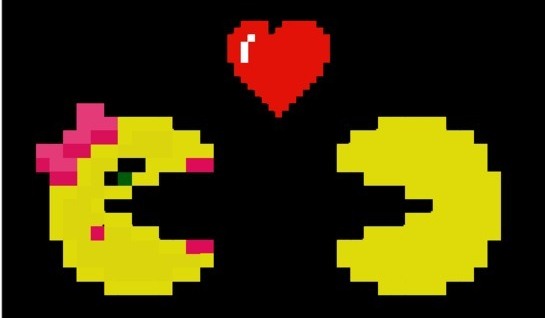
| Cutscenes | Simple chases | Romantic story between Pac-Man & Ms. Pac-Man |
| Audience Appeal | Broad, general | Targeted at both genders, slightly female-oriented |
These small but impactful tweaks made Ms. Pac-Man faster, smarter, and more dynamic. Players couldn’t rely on memorizing patterns anymore; they had to react instinctively.
In short, Ms. Pac-Man was the first true refinement sequel in gaming history.
Cultural Impact: The Rise of the First Lady of Gaming
Ms. Pac-Man wasn’t just a pink bow on a yellow circle — she became a symbol of inclusion.
For many female players in the early ’80s, she represented the first time a game featured a woman — not as a victim or side character, but as the star.
Marketing Genius
Midway’s marketing team leaned into her personality:
“Pac-Man’s Lady Love!”
“She’s got a taste for adventure — and ghosts!”
The cabinets were bright, colorful, and playful. Ms. Pac-Man soon outsold Pac-Man in some U.S. regions and became a cultural icon in her own right.
In fact, Ms. Pac-Man is often cited as the most successful American arcade game of all time, surpassing even her predecessor in coin-drop longevity.
Gameplay: Why Ms. Pac-Man Is the Better Game (Technically)
While the original Pac-Man pioneered the maze genre, Ms. Pac-Man refined it in ways that even Namco later acknowledged.
Here’s why most arcade purists and speedrunners rank her game higher:
1. More Mazes
Four unique mazes — each with different colors and warp tunnel positions — added variety and extended replay value.
2. Smarter Ghosts
Ghosts like Blinky and Pinky used semi-random targeting instead of fixed routes, making each playthrough unique.
This introduced a layer of unpredictability that kept even experienced players on edge.
3. Faster Progression
The pacing ramps up more smoothly, preventing the early-level drag that sometimes plagued Pac-Man.
4. Balanced Difficulty
Power pellets have shorter durations, keeping challenge consistent.
5. Emotional Storyline
Cutscenes between levels show a mini “love story” – from Pac-Man and Ms. Pac-Man’s first meeting to the birth of Baby Pac-Man — one of the earliest uses of narrative continuity in arcade games.
Ms. Pac-Man wasn’t just a sequel; it was a rebirth of the franchise.
Behind the Scenes: Namco vs. Midway
While the games were breaking records in arcades, the companies behind them were locked in conflict.
Namco, in Japan, wasn’t pleased that Midway approved Ms. Pac-Man without direct authorization. Although they retroactively accepted it as official, tensions grew.
When Midway began producing other unsanctioned spin-offs like Pac-Man Plus and Baby Pac-Man, Namco pulled the plug, ending their licensing partnership.
Ironically, Ms. Pac-Man – born from a hack – ended up being canonized as part of the official Pac-Man lineage decades later, under Bandai Namco.
The Legacy: Two Icons, One Family
Over the decades, both Pac-Man and Ms. Pac-Man evolved side by side — sometimes together, sometimes apart.
In Spin-offs and Crossovers
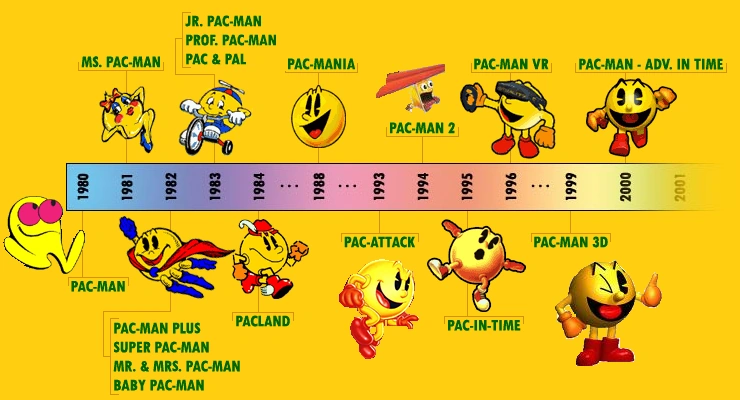
- Pac-Land (1984): Featured both characters in a side-scrolling platformer.
- Pac-Man World (1999–2005): Both reappeared in 3D form, often as partners.
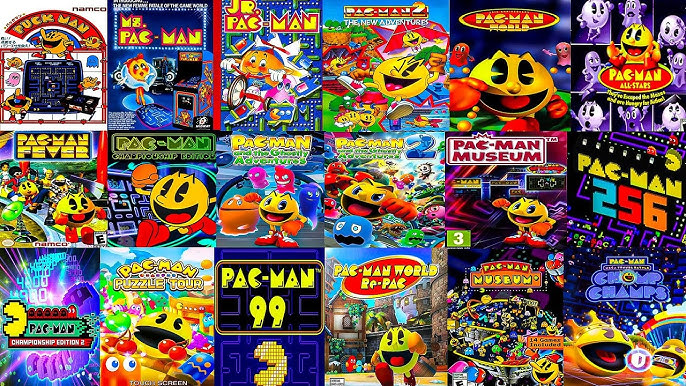
- Pac-Man Museum+ (2022): Included both original and sequel versions, preserving their shared legacy.
In Pop Culture
- Featured in Pixels (2015), Wreck-It Ralph (2012), and dozens of ads and cartoons.
- Ms. Pac-Man often symbolizes “retro femininity” — confident, stylish, and independent.
Despite the “rivalry” narrative, their stories are intertwined — a symbol of evolution through iteration.
The Rivalry: Who’s Truly Better?
| Category | Winner | Why |
|---|---|---|
| Historical Significance | Pac-Man | Defined a generation; invented the genre. |
| Gameplay Depth | Ms. Pac-Man | More mazes, smarter AI, improved pacing. |
| Cultural Impact | Tie | Pac-Man built the icon; Ms. Pac-Man empowered players. |
| Commercial Success | Ms. Pac-Man (U.S.) | Outperformed Pac-Man in long-term arcade revenue. |
| Innovation | Ms. Pac-Man | Introduced narrative, randomness, and improved design. |
In essence:
- Pac-Man is the originator.
- Ms. Pac-Man is the perfected version.
Or, as one arcade historian put it:
“Pac-Man was the phenomenon. Ms. Pac-Man was the masterpiece.”
Ms. Pac-Man’s Legal and Ownership Journey
Interestingly, Ms. Pac-Man’s identity has had a complicated legal journey.
After decades of rights transfers between Namco, AtGames, and GCC, her likeness was partially withheld from some modern re-releases.
That’s why in certain recent titles — like Pac-Man Museum+ – Ms. Pac-Man appears replaced by a lookalike named “Pac-Mom” due to ongoing trademark complexities.
Still, her legacy remains unmistakable – fans continue to celebrate her as the true queen of the arcade.
The Symbolism of Their Rivalry
Beyond gameplay and ownership, the Pac-Man vs. Ms. Pac-Man rivalry symbolizes something deeper about gaming’s evolution:
- Iteration leads to innovation: Ms. Pac-Man proved sequels could surpass originals.
- Inclusivity matters: her success showed that female representation could drive engagement.
- Player challenge evolves: as audiences matured, so did difficulty and design.
Together, they defined not just an era, but the philosophy of refinement through creativity.